Come Together Canada
Our Guide to Mental Health Week 2026
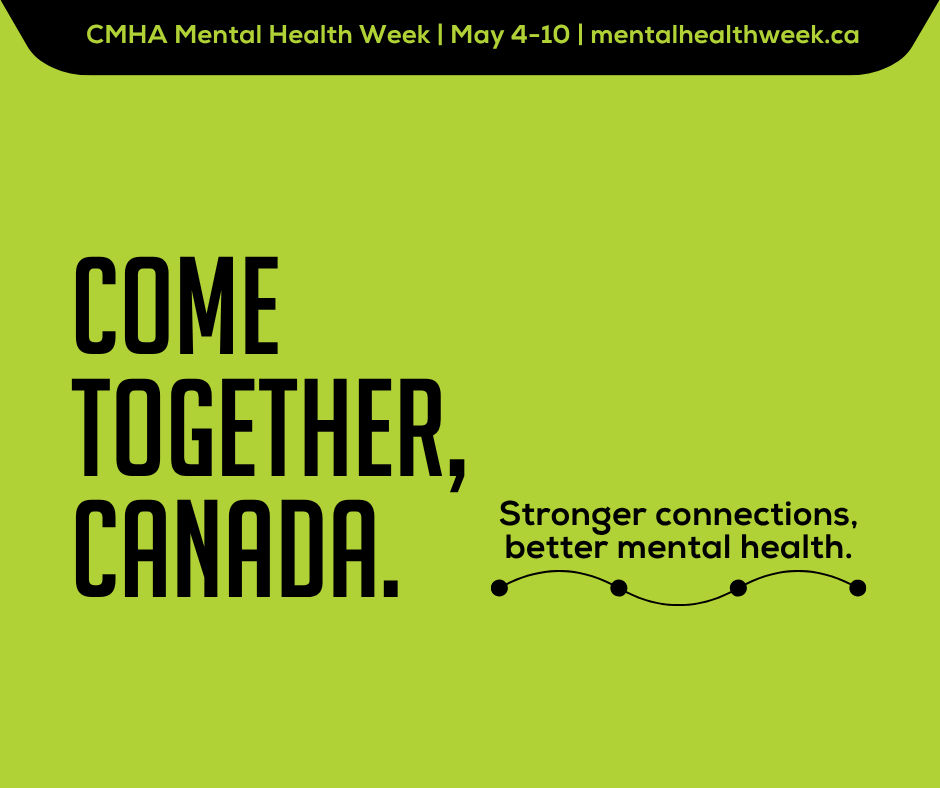
May 4-10 is Mental Health Week across Canada, and this year, the Canadian Mental Health Association (CMHA) is inviting everyone to "Come Together."
The message is simple but powerful: social connection is essential to overall health and well-being. Yet too many people are feeling alone. In Canada, millions say they feel lonely often or always.
At Lynwood Charlton Centre, as Hamilton's Lead Agency for child and youth mental health, we see the impact of this loneliness every day. We also see the solution: connection. When young people feel seen, heard, and supported by caring adults and peers, their mental health improves. When families are woven into a network of community support, they build resilience. When systems work together, no young person falls through the cracks.
This Mental Health Week, we are joining CMHA in calling our community to come together. And we are sharing facts, resources, and local pathways to turn that call into action—because connection does not just feel good. It is essential.
Why Connection Matters for Child and Youth Mental Health
The science is clear. Social connection is a biological necessity, especially for developing brains.
Research shows that the presence of at least one stable, caring adult is one of the most powerful protective factors for child and youth mental health. That adult might be a parent, a grandparent, a teacher, a coach, a counsellor, or a neighbour. What matters is not the title. What matters is the relationship.
When young people have strong connections:
They are more likely to seek help when struggling
They recover more quickly from setbacks
They experience lower rates of anxiety and depression
They develop healthier coping strategies
They feel a sense of belonging that buffers against stress
Conversely, social isolation and loneliness are linked to poorer mental health outcomes, including increased risk of depression, suicidal ideation, and self-harm. For children and youth already navigating mental health challenges, loneliness can be both a cause and a consequence of their struggles.
This is why CMHA's 2026 theme, "Come Together, Canada," is so urgent. It is a call to spark small, everyday actions of connection and to recognize the role we all play in supporting mental health through connection.
The State of Connection: What the Data Tells Us
CMHA has gathered compelling facts about connection and mental health. Here are a few that speak directly to our work with children, youth, and families:
Connection protects mental health. People with strong social connections are more resilient to stress and less likely to experience mental health difficulties.
Loneliness is widespread. Millions of Canadians report feeling lonely often or always, and young people are among those most affected.
Small actions matter. A text check-in, a shared meal, a side-by-side walk—these small moments of connection add up to meaningful protection for mental health.
Connection requires intention. In a busy, screen-filled world, building and maintaining connections takes conscious effort. But that effort pays dividends for well-being.
For Hamilton's children and youth, these facts translate into a clear call to action. As a community, we must intentionally create spaces, opportunities, and relationships where young people can belong.
Our Role: Connecting Systems, Services, and Families
As Hamilton's Lead Agency for child and youth mental health, our job is not only to provide direct care. It is to ensure that care is coordinated, accessible, and equitable across our entire community. That is connection work at a systems level.
We connect young people to the right services at the right time through our Access and System Navigation (ASN) team. When a family does not know where to turn, we are the door.
We connect families to resources and information through our website, blog, and community events. When a parent needs guidance, we provide it.
We connect schools, healthcare providers, child welfare organizations, and community partners through our collaborative work as Lead Agency. When systems work in silos, young people fall through cracks. When we work together, no one is left behind.
We connect youth to each other through our community groups and programs. Peer connection is a powerful source of belonging, and we create intentional spaces where young people can find each other.
And we connect the voices of young people and families to system planning through our commitment to centering lived experience. The people most affected by mental health challenges must be at the table when decisions are made. That is connection that leads to real change.
How You Can Come Together for Hamilton’s Children and Youth
Mental Health Week is an invitation. You do not need to be a therapist or a social worker to answer it. You just need to be willing to show up.
For Parents and Caregivers
Connect with your child. Put down your phone. Make eye contact. Ask, "How are you really feeling today?" Listen without fixing. The goal is not to solve their problems. The goal is to let them know they are not alone.
Connect with other parents. Caregiving can be isolating. Seek out parent support groups, online or in person. Share your struggles and your wins. You do not have to do this alone.
Connect with us. Explore our website. The more you know about local resources, the better equipped you are to support your child and yourself.
For Youth
Connect with a trusted adult. This might be a parent, a teacher, a coach, a counsellor, or a relative. If you are struggling, you do not have to carry it alone. Pick one person and tell them one thing. That is a start.
Connect with a friend. Send a text. Make a plan. Sit together in silence if that is what you both need. Friendship is a lifeline.
Connect with us. Lynwood Charlton Centre offers free, confidential mental health services for children and youth ages 0-18. You do not need a diagnosis. You do not need a referral. You just need to reach out.
For Educators, Coaches, and Community Leaders
Connect young people to resources. Ensure your referral pathways to Lynwood Charlton Centre are clear and up to date. When a young person confides in you, be ready to offer not just a listening ear but a concrete next step.
Create connection spaces. A lunch club. A walking group. A peer support circle. Small, consistent opportunities for young people to connect with each other and with caring adults build belonging over time.
Model connection. Let young people see you checking in on colleagues, asking for help when you need it, and prioritizing relationships. Your example teaches more than your words.
For Everyone
Check in. Send a text to someone you have not talked to in a while. Ask a neighbour how they are doing. Knock on a door. Small gestures break the ice of isolation.
Listen. When someone shares a struggle, resist the urge to fix or minimize. Say, "That sounds really hard. I am here with you."
Share resources. Post about Mental Health Week on social media. Share our blog. Awareness spreads through networks.
Advocate. Speak up for better mental health funding in schools. Challenge stigma when you hear it. Support organizations like Lynwood Charlton Centre that are working every day to build a mentally healthier Hamilton.
Resources to Support Connection
CMHA has developed excellent resources for Mental Health Week, including:
Toolkits for individuals, schools, and workplaces with discussion guides and activities
Fact sheets on the science of connection
A non-diagnostic quiz to help you discover what form of connection works best for you
Social media assets to help spread the word
We encourage you to explore these resources.
A Final Thought
Mental Health Week is seven days. But the need for connection does not end. The loneliness does not clock out. The anxiety does not take a holiday. The young person who is struggling does not get a break. But neither does care. Neither does community. Neither does love.
When we come together—as neighbours, as families, as a city—we build something stronger than any single program or service. We build belonging. We build resilience. We build a Hamilton where every child and youth knows they matter.
Let’s come together. Let us build a mentally healthier future for every young person in our community.
If you are concerned about a child or youth's mental health, we’re here to help. Contact us for more information.