Learning, Reflecting, and Honouring Indigenous Ways of Knowing
June is Indigenous History Month in Canada. For many, it is a time of learning, reflection, and honouring the rich cultures, traditions, and contributions of First Nations, Inuit, and Métis peoples.
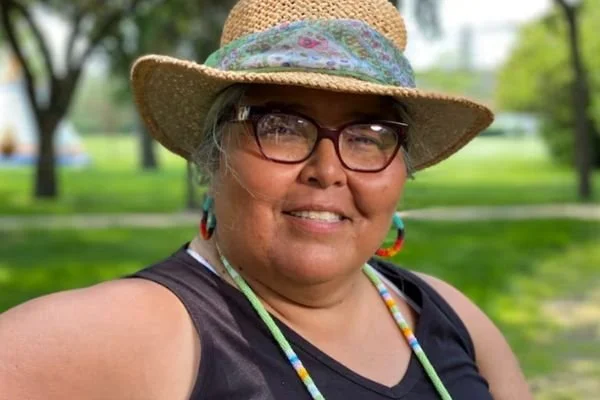
In 2007, Joely BigEagle-Kequahtooway and her husband began a letter-writing campaign to ask city, provincial and the federal governments to recognize June as Indigenous History Month. (Matt Howard/CBC)
But before there was a month, there was June 21st—the Summer Solstice—known as National Indigenous Peoples Day and, earlier, as a day of solidarity. As the CBC has documented in this article, the evolution from a single day to a full month reflects a growing recognition that Indigenous history, knowledge, and ways of being deserve sustained, focused attention.
At Lynwood Charlton Centre, we hold a clear understanding: our work in child and youth mental health cannot be separated from truth and reconciliation. The legacy of residential schools, the ongoing impacts of colonialism, and the systemic barriers faced by Indigenous families are not abstract concepts. They are lived realities that directly affect mental health and well-being.
But reconciliation is not only about acknowledging past harms. It is also about celebrating present strengths and building a future of mutual respect.
This month, we invite you to learn with us. This blog post is the first step in a month-long journey of education, reflection, and action.
What Are Indigenous Ways of Knowing and Being?
Before we describe the day's events, it is important to understand the foundation upon which they are built. Indigenous Ways of Knowing and Being are not a single, uniform set of beliefs. As Queen's University explains, the term recognizes the "beautiful complexity and diversity of Indigenous ways of learning and teaching." The practices, languages, and protocols of one Indigenous community may look very different from another.
However, there are common threads that run through many Indigenous worldviews. As the Government of British Columbia notes, Indigenous Knowledge is:
Holistic, cumulative and dynamic – it encompasses the physical, emotional, spiritual, and intellectual realms, all of which are interconnected.
Built on ancestral relationships with the land, waters, plants, animals, and all elements of creation.
Adaptive to social, economic, environmental, spiritual, and political change.
Passed down through generations via oral tradition, story, metaphor, and lived practice.
Importantly, Indigenous ways of knowing are inseparable from Indigenous ways of being—how one lives, acts, and relates to others. The "Indigenous wholistic framework" (as described in Pulling Together: A Guide for Front-Line Staff) identifies four guiding principles that are common across many Indigenous cultures:
Respect: Honouring Indigenous knowledges, community protocols, and reflecting without judgment on what one sees and hears.
Responsibility: Building and sustaining credible relationships with Indigenous communities and understanding the impact of one's actions.
Relevance: Ensuring that programs, services, and curricula are responsive to the needs identified by Indigenous communities themselves.
Reciprocity: Sharing knowledge throughout the entire learning process, recognizing that all participants are both students and teachers.
These principles are not abstract ideals. They are lived, daily practices that guide how Indigenous Peoples relate to each other, to the land, and to all beings. As the BC government's website states, Indigenous Knowledge is "integrated and applied to daily living." It is practical, experiential, and deeply relational.
This understanding of wholistic health—where mental, physical, emotional, and spiritual well-being are inseparable—aligns profoundly with our mission at LCC. When we support a child's mental health, we are not treating a single symptom in isolation. We are caring for the whole person, in relationship with their family, community, culture, and land.
Deepening Our Understanding | Indigenous Ways of Knowing and Being in the Natural World
This video introduces First Nations and Metis cultural practices that are at the heart of how local Indigenous peoples relate to the earth and each other. This video was created by QUILLS (Queen’s University Indigenous Land-Based Learning STEM).
A Month of Learning, Not a Day of Mourning
As a society, we often focus on Indigenous history through the lens of trauma—residential schools, the Sixties Scoop, and ongoing systemic racism. These truths must be taught and remembered. September's Orange Shirt Day serves that vital purpose: honouring the children who never returned home and educating future generations about the harms of the residential school system.
But June is different. June is a time to celebrate Indigenous ways of knowing and being—the languages, the arts, the ceremonies, the resilience, and the joy that have survived and flourished despite centuries of attempted erasure.
Both are necessary. We need days of mourning and days of celebration. Both are acts of truth and reconciliation.
How You Can Participate This Month
There are many ways to honour Indigenous History Month:
Learn about the Indigenous nations on whose territory you live. Use resources like Native-Land.ca to explore traditional territories, languages, and treaties.
Read books by Indigenous authors. For children and youth, consider works by David A. Robertson, Ruby Slipperjack, or Michael Hutchinson.
Watch Indigenous films and documentaries. The National Film Board of Canada has a rich collection of Indigenous-made films.
Follow Indigenous creators, artists, and educators on social media. Listen and learn from their perspectives.
Support Indigenous businesses and organizations in your community.
Our Commitment to the Future
This June, we recommit to our ongoing work in truth and reconciliation. Our vision is to build stronger, more authentic relationships with Indigenous partners, knowledge keepers, and artists in the Hamilton community. As the EdCan Network article on "Welcoming Indigenous Ways of Knowing" emphasizes, meaningful change requires ethical relationality—an approach that does not deny difference but seeks to understand how different histories and experiences position us in relation to each other.
True reconciliation means co-creating these events with Indigenous peoples, not for them. We are committed to walking that path, listening, and learning.
Nya:weh (Haudenosaunee Cayuga)
Nya:wen (Haudenosaunee Mohawk)
Chi Miigwetch (Anishinaabe)
With gratitude and respect,
The Team at Lynwood Charlton Centre